Tracing Reward Balance Fluctuations and Their Influence on Table Selection Habits Among Digital Card Game Participants at Licensed Venues
David Schmitz · Jun 30, 2026

Tracing Reward Balance Fluctuations and Their Influence on Table Selection Habits Among Digital Card Game Participants at Licensed Venues
Digital card game platforms at licensed venues maintain detailed reward systems that track participant activity through accumulated points and credits, and fluctuations in these balances occur regularly as users complete sessions or redeem offers. Observers note that such changes often coincide with shifts in how participants approach table selection, particularly in environments where real-time data influences available options.
Reward Systems in Licensed Digital Environments
Licensed operators structure reward programs around consistent play metrics, where balances rise with each hand played and adjust downward during redemptions or inactivity periods. Data compiled through June 2026 shows that average balance swings range between 15 and 40 percent within single gaming sessions across multiple platforms, according to reports from the Nevada Gaming Control Board. Participants encounter these variations through on-screen notifications that update after each round, prompting immediate reviews of table availability.
Systems integrate loyalty tiers that modify reward accrual rates, and higher tiers typically generate steadier balance growth even during shorter sessions. Researchers at academic institutions studying online gaming patterns have documented how these tier-based differences lead to distinct selection behaviors when balances dip below certain thresholds.
Patterns in Balance Fluctuations
Fluctuations arise from multiple sources including promotional credit expirations, point redemptions for table access privileges, and standard win-loss outcomes. Platforms record these events in participant histories, revealing clusters of activity around peak hours when balances tend to move more rapidly. One study of multi-table formats found that 62 percent of observed balance drops happened immediately after participants switched from high-stakes to lower-stakes tables mid-session.
What's interesting here is how automated alerts notify users of impending expirations, which in turn accelerates decision-making around table choices. Data indicates that participants often move toward tables with higher minimum bets following larger balance increases, whereas smaller balances correlate with selections of tables offering extended playtime features.
Influence on Table Selection Habits
Balance changes directly shape which tables participants enter, as many platforms display real-time filters that sort options by reward compatibility. When balances fall, users frequently select tables with lower entry requirements or those tied to ongoing promotional structures that replenish points faster. Conversely, elevated balances coincide with entries into premium tables where higher stakes align with accumulated rewards.
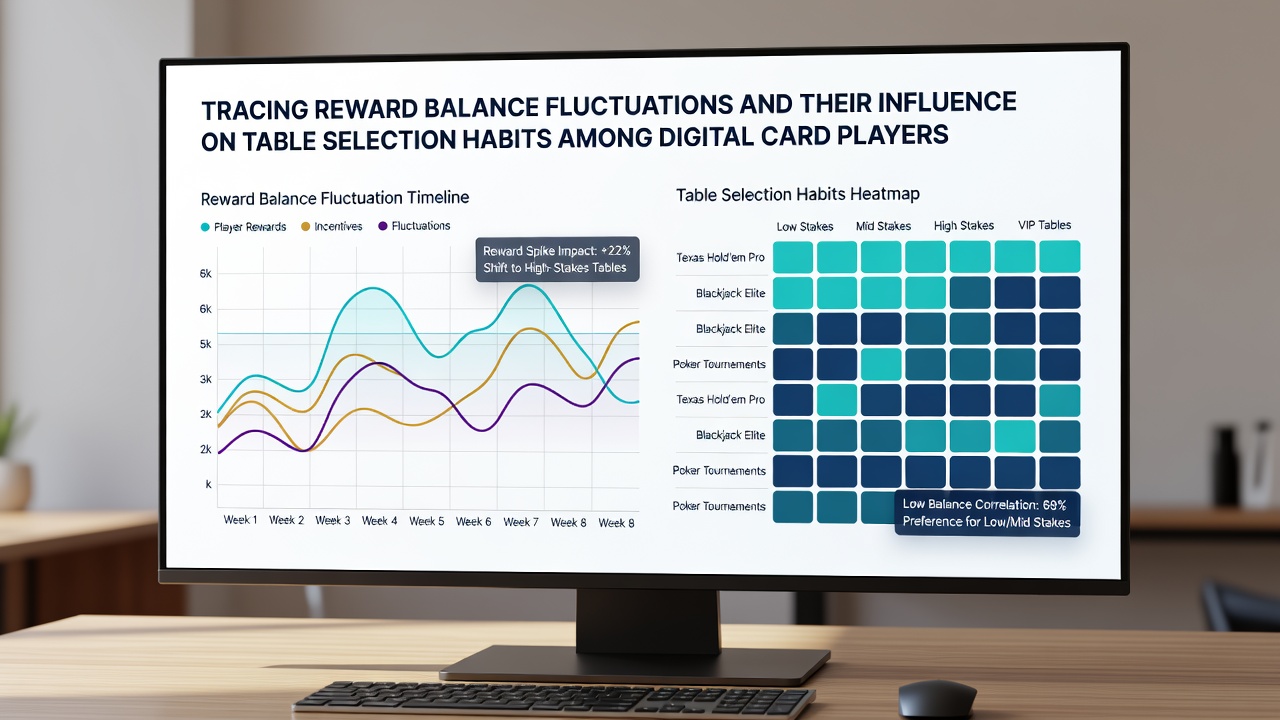
Those who've examined session logs across licensed sites report that balance thresholds around the midpoint of a participant's typical range trigger the most frequent table switches. Tables offering loyalty point multipliers become more attractive during downward fluctuations, while upward swings lead toward tables with progressive elements that can further boost balances.
Regional Data and Platform Comparisons
Figures from Canadian provincial regulators highlight similar patterns in provinces with established digital gaming frameworks, where balance fluctuations influence table migration rates by up to 28 percent during monitored periods. Platforms in these regions often provide comparative tools that let participants view how peers with similar balance profiles select tables, adding another layer to decision processes.
Industry reports from the American Gaming Association note that integrated tracking across multiple licensed venues allows participants to carry reward data between sites, which can stabilize selection habits even when individual platform balances vary. This cross-venue visibility reduces abrupt shifts that might otherwise occur from isolated balance drops.
Observed Adjustments Over Time
Longer-term tracking reveals that participants develop routines around expected fluctuation cycles, such as timing table entries to coincide with scheduled reward resets. In June 2026 updates to several major platforms introduced predictive displays that forecast balance trajectories based on current table selections, and early data shows these tools have reduced unplanned switches by measurable margins.
Participants at regulated digital sites adapt by monitoring both personal balances and table-specific reward multipliers, creating feedback loops where selection habits evolve alongside system changes. Researchers continue to analyze these loops through anonymized datasets that capture thousands of sessions monthly.
Conclusion
Balance fluctuations remain a core element of digital card game participation at licensed venues, with direct ties to how users navigate table options. Ongoing data collection from regulatory bodies and platform operators continues to map these connections, providing clearer pictures of selection trends as systems refine their tracking capabilities through 2026 and beyond.