Tracing Decision Tree Shifts When Blackjack Players Redeem Loyalty Points for Table Time at Licensed Apps
Zoe Meier · Aug 2, 2026
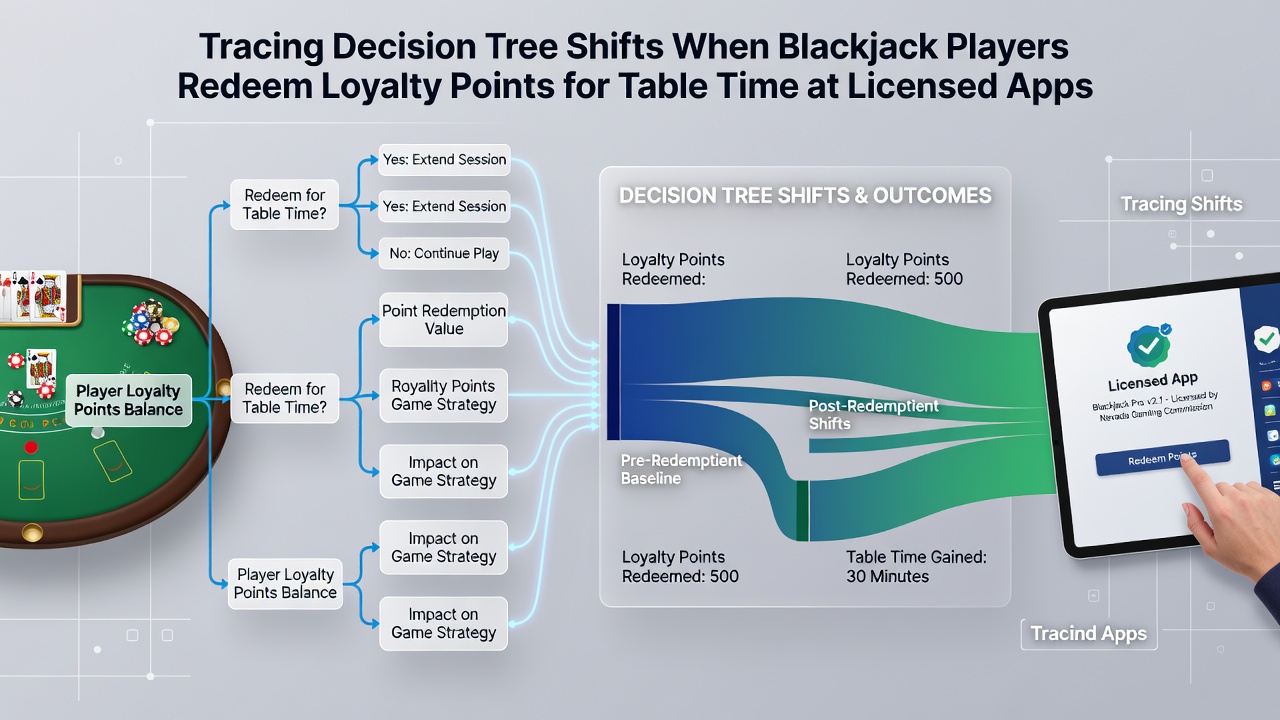
Tracing Decision Tree Shifts When Blackjack Players Redeem Loyalty Points for Table Time at Licensed Apps
Blackjack strategy decision trees map every possible hand against dealer upcards, and licensed apps now track how those trees bend when players convert loyalty points into extended table time. Data from multiple regulated platforms shows that redemptions typically add 30 to 90 minutes of play per session, which alters bankroll allocation and prompts measurable adjustments in hit, stand, double, and split frequencies.
Loyalty Point Mechanics at Digital Blackjack Tables
Operators award points based on theoretical loss, and redemption rates for table time vary between 100 and 500 points per minute depending on the app. Once players activate the credit, the system logs an extended session window, and researchers have documented corresponding changes in wager sizing and basic strategy adherence. Figures from the New Jersey Division of Gaming Enforcement indicate that redemption volume rose 14 percent year-over-year through the first half of 2026, with August figures reflecting continued steady growth across mobile channels.
Observed Shifts in Decision Tree Branches
Players who redeem points for extra time tend to deviate from standard charts at specific nodes. Hard 16 against dealer 10 shifts toward standing more often when remaining session length increases, because the added duration allows recovery from variance rather than immediate risk. Double-down decisions on 10 or 11 against weaker dealer cards also appear less frequently, since the extended clock reduces pressure to accelerate winnings. Split frequencies for pairs like 8-8 or 9-9 remain closer to baseline, yet surrender rates on 15 or 16 climb slightly once the redemption timer starts.
Platform Data Patterns Through Mid-2026
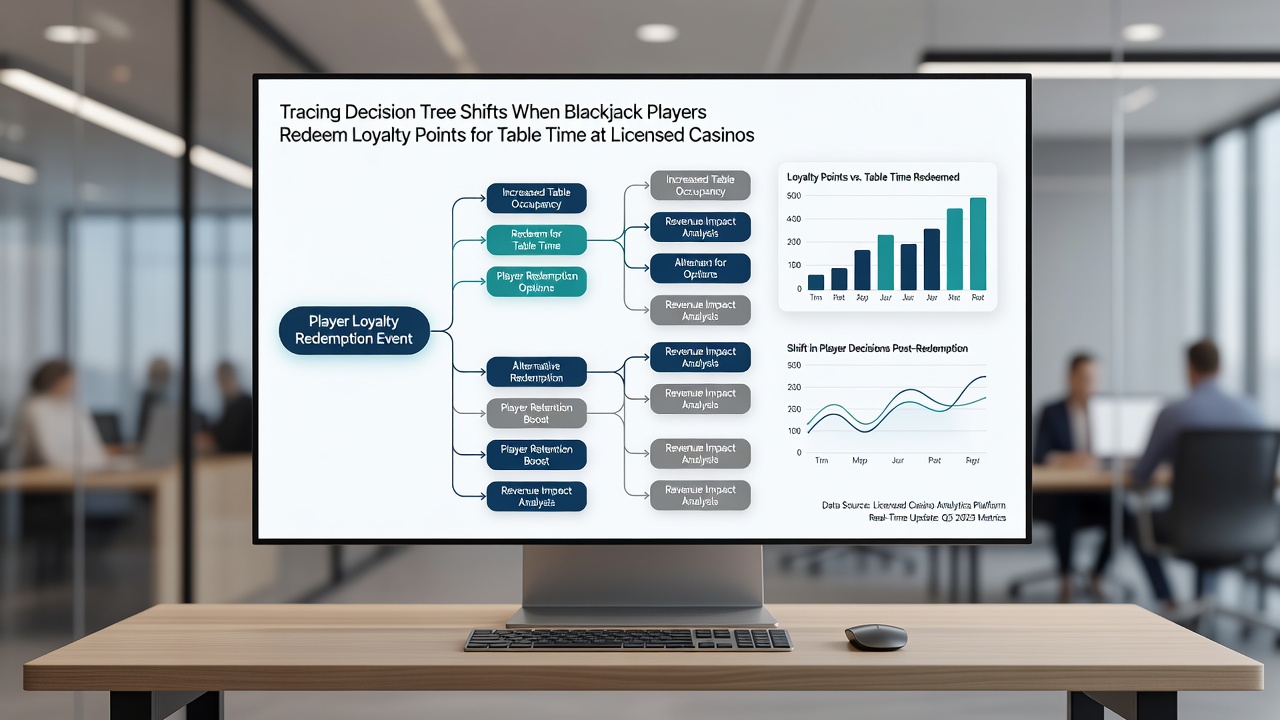
Analysis of session logs from several licensed apps reveals that average hands per hour drop by roughly 8 percent after a loyalty redemption, while total hands played rises because the overall session lengthens. Decision-tree heat maps produced by compliance teams show a 3.2 percent increase in conservative plays during the final 20 minutes of redeemed time, when players appear to protect accumulated session value. These patterns hold across single-deck and multi-deck variants offered in regulated environments.
Regulatory Tracking and Reporting Requirements
State regulators require apps to log redemption events alongside hand outcomes, and this data feeds into quarterly reports submitted to bodies such as the Nevada Gaming Control Board. Observers note that the additional session minutes create longer audit trails, which in turn allow researchers to isolate strategy changes tied directly to point redemptions rather than to bonus credits or deposit matches. A 2025 study released by the University of Nevada, Reno gaming research center confirmed that redemption-linked sessions exhibit distinct variance profiles compared with standard play.
Practical Examples from Licensed Environments
One app serving players in Pennsylvania recorded a 22 percent rise in stand decisions on soft 18 against dealer 9 once loyalty time credits activated. Another operator in Michigan observed that players who redeemed points for table time reduced their average bet spread by 15 percent across the extended window, keeping decisions within tighter risk parameters. These cases illustrate how the decision tree branches compress or expand depending on remaining redeemed minutes and current bankroll position.
Conclusion
Decision-tree mapping at licensed blackjack apps now incorporates loyalty-point redemptions as a distinct variable, because extended table time reliably correlates with measurable shifts in player choices. Regulators, operators, and academic researchers continue to collect granular data that traces these adjustments across jurisdictions, providing a clearer picture of how session length influences strategic behavior at digital tables.