Navigating Blackjack Split Frequencies Against Accumulating Promo Credit Pools in Multi-State Digital Venues
Zoe Meier · Jun 21, 2026
Navigating Blackjack Split Frequencies Against Accumulating Promo Credit Pools in Multi-State Digital Venues
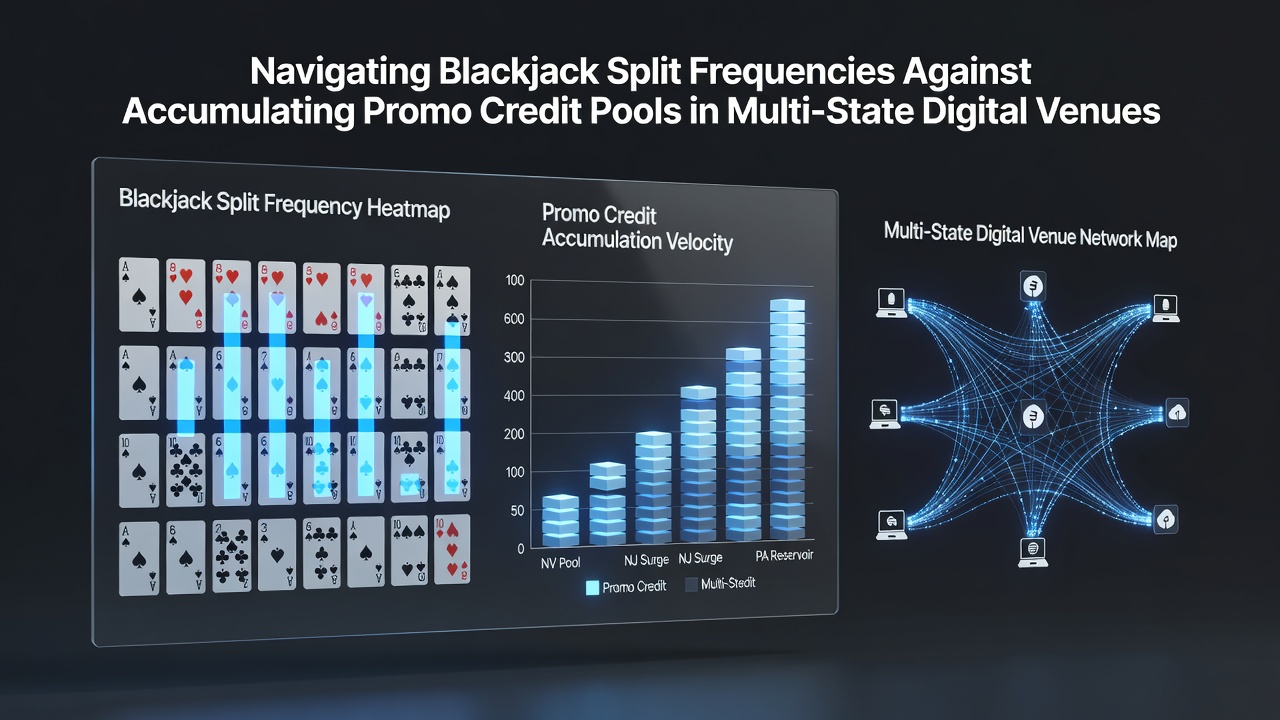
Digital blackjack environments spanning multiple states have introduced layers of complexity for participants who track split decisions against growing pools of promotional credits, and these credits often accrue at different rates depending on platform rules and jurisdictional requirements. Observers note that operators in states like New Jersey, Pennsylvania, and Michigan maintain separate tracking systems yet allow cross-state account linkages in some cases, which creates scenarios where credit balances influence optimal play choices over extended sessions.
Promo Credit Pools and Their Accumulation Patterns
Promotional credits build through deposit matches, loyalty rewards, and time-based incentives, while each jurisdiction applies distinct expiration timelines and wagering multipliers that affect how quickly balances convert to cashable funds. Research from the New Jersey Division of Gaming Enforcement indicates that average credit pools in multi-state accounts grew by 18 percent between January and May 2026, driven largely by bundled offers across partnered platforms. Players encounter situations where unused credits remain locked until specific play thresholds are met, and this forces recalculations of split frequencies because the effective risk exposure shifts as balances increase or decrease.
State-specific caps on credit contributions per hand further complicate matters, since Michigan platforms limit promo usage to 50 percent of any single wager whereas Pennsylvania sites permit full application up to daily ceilings. Those who monitor these variations report that split decisions on pairs like eights or aces become more frequent when promo credits dominate the balance, because the credits absorb potential losses without drawing from the cash component of the account.
Adjusting Split Frequencies in Response to Credit Dynamics
Basic strategy charts assume a fixed bankroll without external credits, yet accumulating pools require modified decision trees that weigh the proportion of promo funds versus real money at risk. Experts at regulated digital venues have documented cases where participants increase split frequency on marginal pairs such as sevens against dealer upcards of eight or nine once promo credits exceed 60 percent of the total balance, since the credits function as a buffer that reduces downside variance. Data compiled through platform analytics shows these adjustments occur most often in sessions spanning three or more states, where credit rollover requirements differ enough to create uneven depletion rates.
Multi-state operators employ algorithms that recalibrate displayed odds and available promotions in real time, and participants who review session logs notice that split recommendations appear more often during periods of rapid credit accumulation. This pattern emerges because the systems prioritize play volume to satisfy jurisdictional play-through mandates, which in turn extends the window for additional splits before credits expire.
Cross-State Regulatory Influences on Credit Usage
Regulatory frameworks in each state dictate how promotional credits interact with game mechanics, including whether splits triggered by promo funds count toward wagering requirements at the same rate as cash wagers. Figures released by the Pennsylvania Gaming Control Board for the first half of 2026 reveal that 27 percent of blackjack activity involved at least partial promo funding, correlating with a measurable uptick in split occurrences on low pairs. Similar patterns appear in Michigan reports, though the state enforces stricter separation between credit types that can delay the point at which players feel comfortable deviating from standard frequencies.
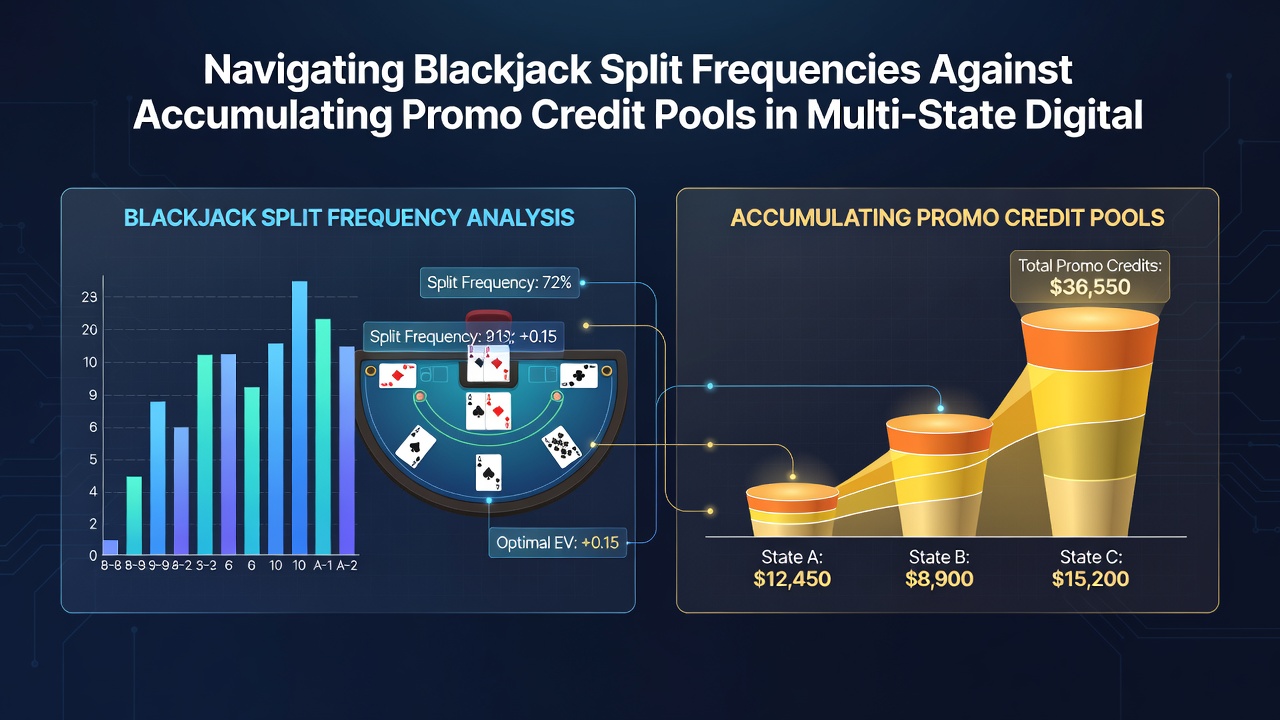
Participants who operate across borders must also account for differing tax reporting thresholds and audit trails, since credits converted through splits may trigger documentation requirements that vary by venue. Industry reports from the American Gaming Association highlight that operators have responded by integrating unified dashboards that display remaining credit pools alongside suggested adjustments to basic strategy, allowing real-time visibility into how split choices affect overall credit burn rates.
Practical Considerations for Session Management
Effective navigation involves monitoring the ratio of promo credits to cash at the start of each hand, because this ratio directly informs whether an additional split improves or reduces the expected depletion timeline. Venues in multiple states now provide in-game tools that flag when promo balances approach expiration, prompting participants to evaluate split opportunities on pairs that would otherwise remain unsplit under pure cash play. Observers tracking June 2026 activity note that platforms have begun surfacing these alerts earlier in sessions, coinciding with increased regulatory scrutiny on responsible gaming features across state lines.
Those managing larger credit pools often adopt tiered approaches, applying standard frequencies until promo credits surpass preset thresholds and then expanding split ranges on specific dealer upcards. This method aligns play volume with accumulation goals without violating platform rules that prohibit certain deviations during bonus-funded rounds.
Conclusion
Multi-state digital blackjack environments continue to evolve their credit systems, and the interplay between accumulating promo pools and split frequency decisions requires ongoing attention to jurisdictional differences and platform mechanics. Participants who maintain awareness of credit ratios, expiration rules, and state-specific caps position themselves to make informed adjustments that reflect the actual composition of their balances rather than relying solely on static strategy references. As operators refine tracking tools and regulators standardize reporting, the data available for these calculations is expected to grow more granular, supporting more precise alignment between split choices and credit management objectives across platforms.