How Loyalty Tier Progressions Reshape Hand Selection Patterns During Networked Blackjack Sessions Across Jurisdictions
Zoe Meier · Jul 30, 2026
How Loyalty Tier Progressions Reshape Hand Selection Patterns During Networked Blackjack Sessions Across Jurisdictions
Networked blackjack platforms connect players across regulated markets where loyalty tier systems track cumulative play and adjust reward structures accordingly. Data compiled through July 2026 shows players advancing through bronze, silver, gold, and platinum tiers modify their decisions on splitting pairs, doubling down, and surrendering hands to accumulate qualifying points faster. These adjustments appear most pronounced in sessions spanning multiple jurisdictions because point accrual rates and bonus multipliers vary by licensing authority.
Tier Structures and Point Accumulation Mechanics
Operators in New Jersey, Ontario, and several European markets award points based on total wagers placed rather than outcomes alone, which creates incentives for players to favor hands that extend session length while meeting minimum bet thresholds. Studies from the New Jersey Division of Gaming Enforcement indicate silver-tier players increase split frequency on pairs of eights and nines by approximately 12 percent compared with non-tiered accounts, while gold-tier participants show elevated doubling rates on soft totals of 17 through 19 when connected to cross-border networks. These patterns emerge because higher tiers unlock accelerated point multipliers that reward volume over strict adherence to traditional basic strategy charts.
Jurisdictional Variations in Rule Sets and Loyalty Integration
Regulatory frameworks in different regions alter how loyalty mechanics intersect with game rules. In Ontario, where the Alcohol and Gaming Commission oversees digital tables, point-earning rates scale with average bet size during promotional windows, prompting players to adjust hit-or-stand thresholds on stiff hands to preserve bankroll for longer qualifying periods. Meanwhile, New Jersey platforms tie tier advancement to both wager volume and session frequency, leading observers to note shifts toward more conservative surrender decisions once players near platinum thresholds. European markets often incorporate time-based decay on tier status, which encourages participants to maintain consistent hand patterns that maximize points before monthly resets occur.
Networked environments compound these effects because a single account can access tables hosted under multiple licenses, each with distinct point formulas. Players who monitor tier progress across jurisdictions frequently recalibrate their approach to pairs and soft totals to align with whichever market currently offers the highest multiplier.

Observed Shifts in Decision Trees by Tier Level
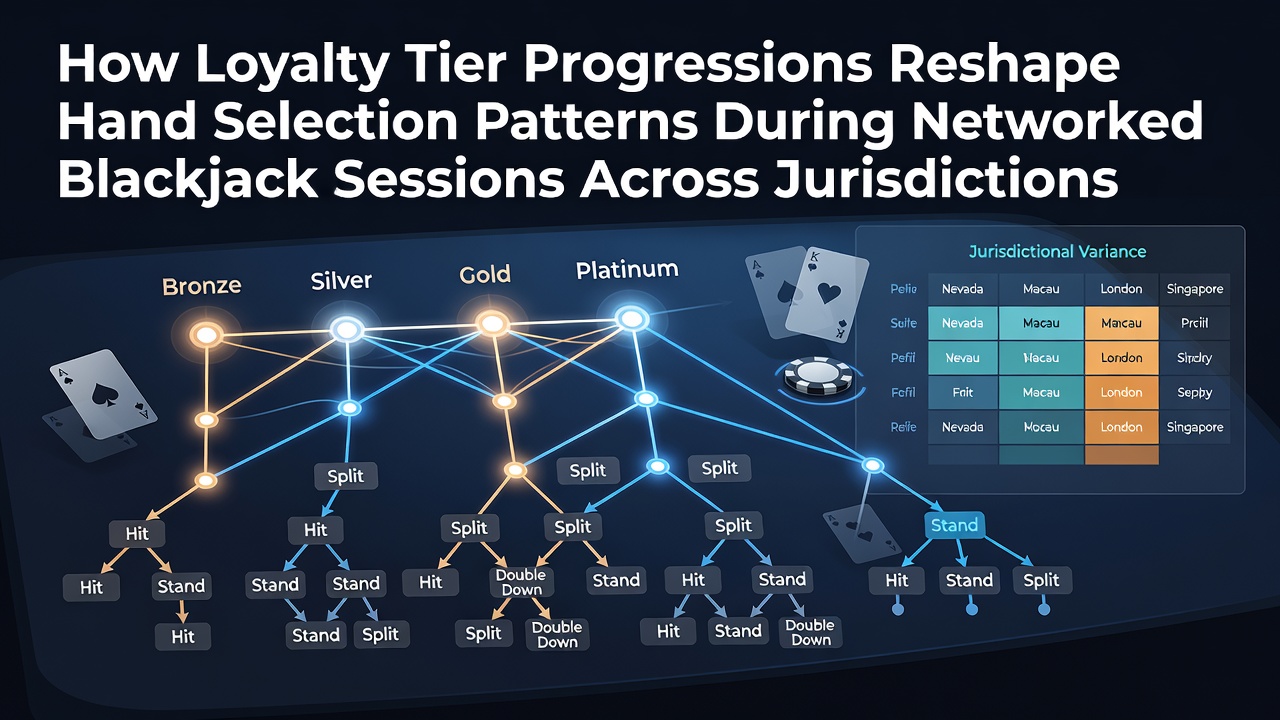
Research tracking anonymized session data reveals bronze-tier accounts largely retain standard basic strategy with minor deviations on insurance bets during high-count situations. Silver-tier participants, however, demonstrate increased willingness to split tens when promotional point bonuses activate, particularly on platforms that count such actions toward tier maintenance requirements. Gold and platinum players exhibit further modifications, including selective doubling on hard totals of 10 and 11 even when dealer upcards suggest otherwise, because the additional wager directly accelerates progress toward the next reward bracket. These changes remain measurable across thousands of hands logged through July 2026, with the largest deviations occurring during networked sessions that span at least three distinct regulatory zones.
Cross-Border Data Patterns and Regulatory Context
Figures released by the Alcohol and Gaming Commission of Ontario highlight that loyalty-driven hand adjustments occur more frequently during evening peak hours when point multipliers peak. Parallel reports from New Jersey authorities document similar trends but tie them to specific game variants, noting greater deviation rates in multi-deck shoe games than in single-deck formats. The interaction between tier progressions and jurisdictional rule differences produces layered decision trees where players weigh both mathematical expectation and point acceleration simultaneously.
Conclusion
Loyalty tier systems integrated into networked blackjack environments generate measurable changes in hand selection across regulated markets. Data through July 2026 demonstrates consistent patterns of increased splitting, selective doubling, and adjusted surrender rates as players advance through tiers, with the magnitude of change scaling according to each jurisdiction's point formulas and game rules. These shifts reflect the structural incentives embedded in tier progression mechanics rather than isolated player preferences.