Examining how bonus codes reshape basic strategy charts for single-deck variants at emerging digital platforms
Sofia Fischer · May 26, 2026
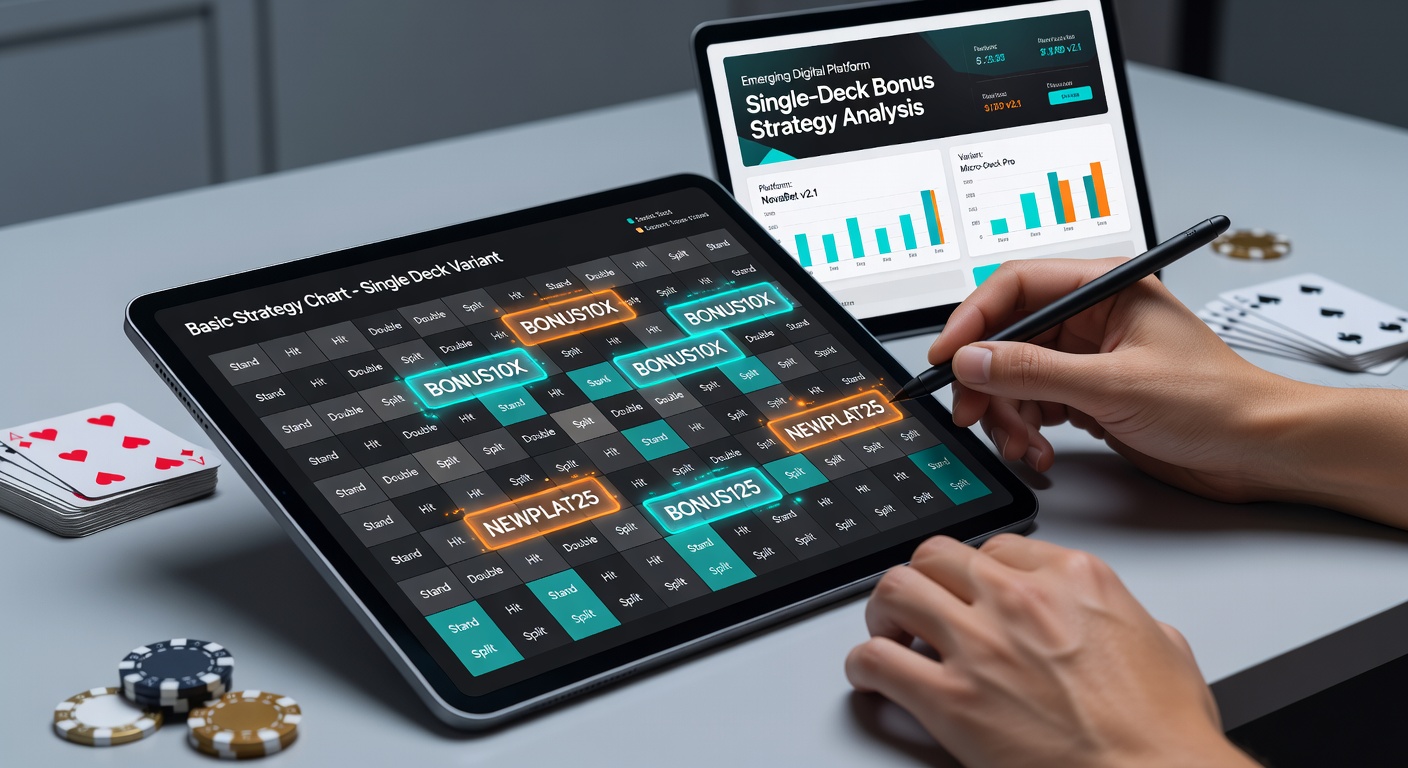
Examining how bonus codes reshape basic strategy charts for single-deck variants at emerging digital platforms
Single-deck blackjack variants have gained traction on newer digital platforms where operators introduce bonus codes that alter player bankrolls and influence decision points during hands, and these codes often tie into wagering requirements that prompt adjustments to standard basic strategy charts developed for multi-deck formats.
Researchers have documented that single-deck rules produce different optimal plays compared with six-deck or eight-deck games because the composition of the remaining deck shifts more dramatically after each card is dealt, and bonus credits layered on top of these games create an effective change in bankroll volatility that players address by modifying hit, stand, double, and split thresholds in charts tailored to promotional play.
Core Differences in Single-Deck Basic Strategy
Basic strategy charts for single-deck blackjack list specific actions such as doubling on soft 18 against a dealer 3 through 6 or standing on hard 16 against a dealer 10, and these recommendations arise from exact combinatorial probabilities that account for the absence of cards already removed from the 52-card pack. Emerging platforms frequently offer these variants with rule sets that include dealer hits on soft 17 or restrictions on doubling after splits, and bonus codes attached to deposits add credits that must be wagered a set number of times before withdrawal, which changes the mathematical weight players assign to each decision because busting a hand with bonus funds reduces the opportunity to clear playthrough obligations.
Data from May 2026 shows increased deployment of single-deck titles at platforms entering new regulatory jurisdictions, and operators integrate bonus code systems that automatically adjust displayed strategy prompts based on current promotional balance versus cash balance.
How Bonus Codes Interact with Strategy Adjustments
Bonus codes function by crediting player accounts with a percentage match or fixed amount that carries distinct wagering conditions, and these conditions encourage longer sessions where the single-deck depletion effect becomes more pronounced. Players therefore consult revised charts that incorporate the remaining bonus balance as a variable, shifting certain marginal decisions such as whether to split 8s against a dealer 9 when a large portion of the bankroll consists of promotional funds. Industry reports indicate that platforms in regulated Canadian markets have introduced single-deck options paired with time-limited bonus codes, and these pairings require strategy modifications that account for the accelerated pace of deck cycling in digital single-deck shuffles.
One study released by the University of Nevada, Reno examined player behavior under promotional conditions and found measurable deviations from baseline charts when bonus funds exceeded 50 percent of total balance, particularly in choices around insurance and late surrender that appear only in single-deck rule sets.
Platform-Specific Chart Modifications Observed in 2026
Digital operators launching in previously untapped regions during early 2026 have published updated strategy resources that list separate columns for bonus-play scenarios, and these resources highlight changes such as more frequent doubling on 9 versus dealer 3 when bonus credits are active because the effective house edge calculation incorporates the playthrough multiplier. Figures released by the Ontario Lottery and Gaming Corporation for the period ending May 2026 reveal growth in single-deck table traffic on licensed sites, correlating with bonus code redemptions that coincide with rule variations like no double-down on soft hands. Observers note that software providers now embed dynamic chart overlays triggered by active bonus codes, allowing real-time updates to recommended actions as the remaining deck composition and promotional balance both evolve during a session.

These overlays reference the same combinatorial data used in traditional charts yet add conditional branches for when bonus funds represent the majority of the current stake, and such branches alter surrender recommendations on hard 15 against dealer aces in single-deck games offered with cashback-style bonus codes.
Regulatory and Technical Factors Driving Chart Evolution
Regulatory frameworks in multiple jurisdictions require clear disclosure of how promotional funds interact with game rules, and this requirement has prompted platforms to supply downloadable or in-game strategy aids that differentiate cash and bonus play. Technical integration of bonus code engines with random number generators allows platforms to track deck penetration alongside bonus consumption rates, generating session-specific guidance that deviates from static single-deck charts in measurable ways. Australian regulatory summaries published in May 2026 documented similar adaptations among licensed online operators entering the single-deck segment, where bonus code mechanics influence the frequency of certain strategy deviations such as standing on hard 13 against dealer 2 when playthrough remains incomplete.
Those who track these developments point to the convergence of single-deck mathematics and promotional accounting as the primary driver behind chart revisions, rather than any alteration to core card probabilities themselves.
Conclusion
Bonus codes continue to prompt measurable revisions to single-deck basic strategy resources as emerging platforms expand their offerings, and the resulting charts integrate both combinatorial probabilities and wagering requirement variables into unified decision trees. Data collected through May 2026 demonstrates that operators and regulators alike treat these adjustments as standard practice when single-deck variants carry promotional overlays, ensuring players receive accurate guidance that reflects the dual constraints of deck composition and bonus balance management.