Caesars Entertainment Moves Toward Private Ownership Through Fertitta Entertainment Acquisition
David Schmitz · May 31, 2026

Caesars Entertainment Moves Toward Private Ownership Through Fertitta Entertainment Acquisition
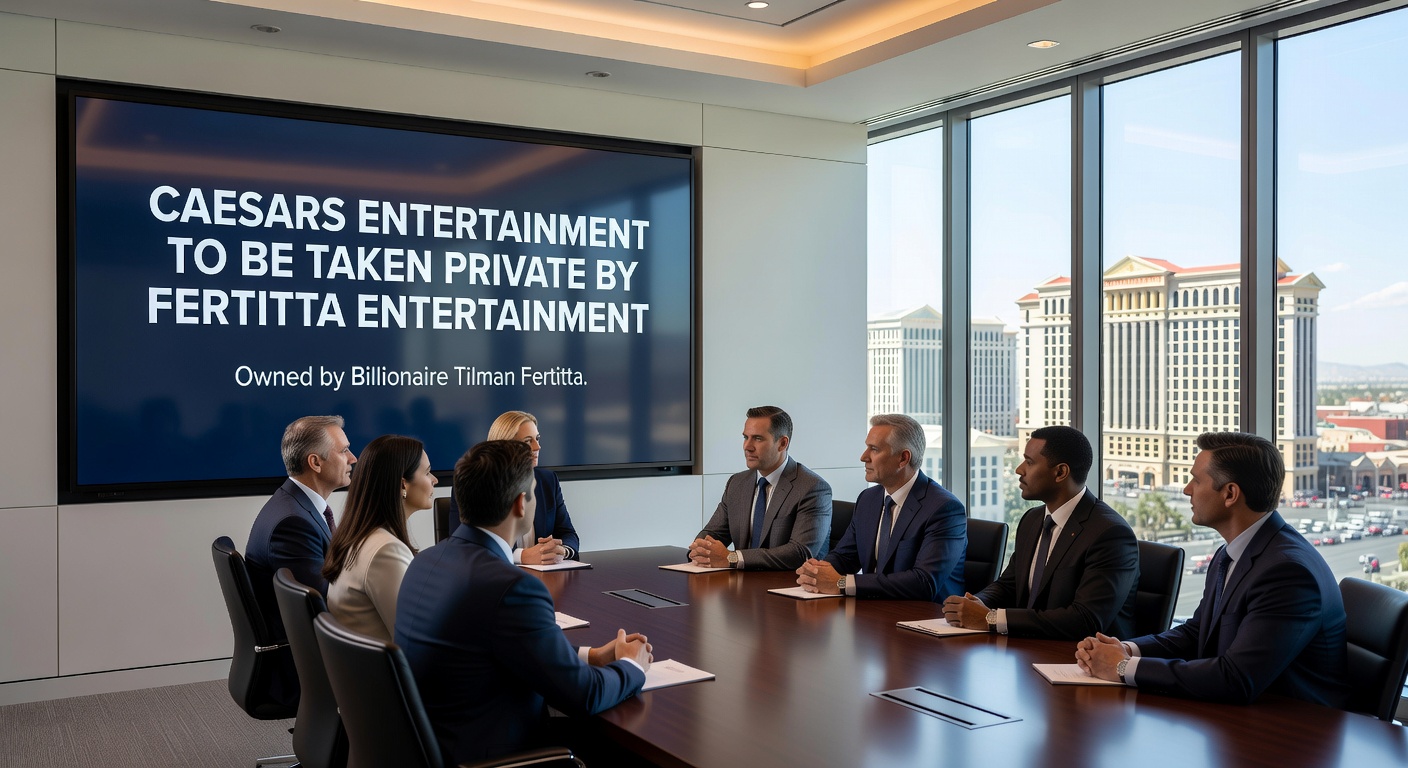
Caesars Entertainment announced its planned transition to private ownership under Fertitta Entertainment in an all-cash transaction valued at $17.6 billion, which equates to $31 per share and represents a 49 percent premium relative to the February 25 closing price before market rumors surfaced. Observers note that the agreement incorporates the assumption of nearly $12 billion in existing debt and draws financing from equity contributions alongside commitments from 10 banks. The structure features a go-shop period extending until July 11, during which Caesars may solicit alternative proposals, and the completion hinges on approvals from shareholders plus multiple regulatory bodies.
Transaction Structure and Financing Details
The deal terms specify full cash consideration for shareholders while requiring Fertitta Entertainment, controlled by billionaire Tilman Fertitta, to secure the necessary capital through a combination of equity and debt instruments arranged with the participating banks. Data from the announcement indicates that the total enterprise value reaches $17.6 billion once the debt assumption is factored in, creating a combined operation that would manage approximately 60 casinos and gaming facilities across various markets. Those familiar with similar large-scale gaming transactions point out that such financing packages often involve layered debt structures to accommodate the scale of the undertaking without immediate disruption to ongoing operations.
Regulatory filings associated with the proposal outline standard conditions for closing, including clearance under antitrust statutes where overlapping properties exist in regions such as Atlantic City. The go-shop mechanism allows the Caesars board to evaluate any superior offers that might emerge before the July 11 deadline, a provision that maintains flexibility during the review process. Experts have observed that this timeline aligns with typical review periods for major gaming industry consolidations, where shareholder votes and state-level gaming commission examinations run in parallel tracks.
Market Overlaps and Antitrust Considerations
Potential divestitures in markets with concentrated ownership receive explicit mention in preliminary analyses of the transaction, particularly where Fertitta and Caesars properties compete directly. Atlantic City stands out among these locations because both entities maintain significant footprints there, prompting scrutiny from federal and state authorities. Government agencies such as the Federal Trade Commission have historically required asset sales in comparable situations to preserve competitive dynamics in regional gaming sectors, according to patterns documented in prior merger reviews.
The combined portfolio would span numerous jurisdictions, each carrying its own licensing and compliance requirements that must receive fresh approvals post-transaction. Regulatory bodies in states including Nevada, New Jersey, and others maintain separate evaluation processes that examine ownership changes for suitability and public interest factors. Industry reports indicate that such reviews typically extend several months and may involve conditions tailored to local market conditions rather than uniform national standards.
Timeline and Approval Pathways
Shareholder approval represents one of the immediate milestones, with the board expected to present the transaction for a vote following the conclusion of the go-shop window. Regulatory clearances from gaming control boards and antitrust enforcers form additional gates that determine whether the deal advances to closing. As developments unfold in May 2026, parties involved continue preparing documentation for these reviews while monitoring any competing bids that could alter the current agreement.
Financing commitments from the 10 banks provide the debt component necessary to fund the cash payments and refinance portions of the assumed obligations. These arrangements typically include covenants tied to operational performance metrics common in leveraged gaming acquisitions. Observers note that the equity contribution from Fertitta Entertainment supplies the balance required to reach the full purchase price without reliance on public market financing at this stage.
Combined Operations and Geographic Footprint
Integration planning centers on unifying the operational platforms of the two companies while preserving distinct brand identities where advantageous. The resulting entity would control facilities that together generate substantial revenue across entertainment, lodging, and gaming verticals. Geographic distribution spans multiple states, creating both synergies in procurement and marketing as well as the need for localized compliance teams to handle varying regulatory environments.
Antitrust reviews focus on specific metropolitan areas where market share concentrations exceed thresholds established in enforcement guidelines. Authorities may request data on customer overlap, pricing patterns, and alternative entertainment options available to consumers in those regions. Historical precedents show that negotiated divestitures often resolve such concerns without blocking the broader transaction.
Conclusion
The proposed acquisition positions Caesars Entertainment for private ownership under Fertitta Entertainment through a structure that addresses both financial and regulatory dimensions. Completion depends on navigating the go-shop period, securing shareholder support, and obtaining clearances from relevant oversight bodies across affected jurisdictions. Market participants continue to track filings and announcements that will clarify the path forward as the July 11 go-shop deadline approaches.